
Why Accurate Shop Drawings Save Thousands on Fabrication.
It all begins with an idea.
1. Material Is Expensive — And Mistakes Multiply Fast
Stone, steel, millwork, cabinetry — none of it is cheap. And once it’s cut, it’s cut. If a radius is wrong, a dimension is off by ½”, or a tolerance isn’t coordinated properly, you’re not just fixing a line on a screen. You’re:
Reordering material
Paying for additional labor
Delaying install
Potentially losing credibility with the client
On stone projects, especially, one wrong template or misinterpreted drawing can result in remaking multiple pieces. Not only that, there are different finishes for stone that require different production techniques and understanding this dectates weither you need to add specific tolerances. For example, if you want a bush hammer finish on stone, you need to add a +1/16” — +1/8” on each face being worked on to account for the bush hammer or leathering required. That’s not hundreds of dollars — that’s thousands. Accurate shop drawings eliminate that risk before fabrication even begins.
2. Clear Drawings Remove Guesswork From the Shop
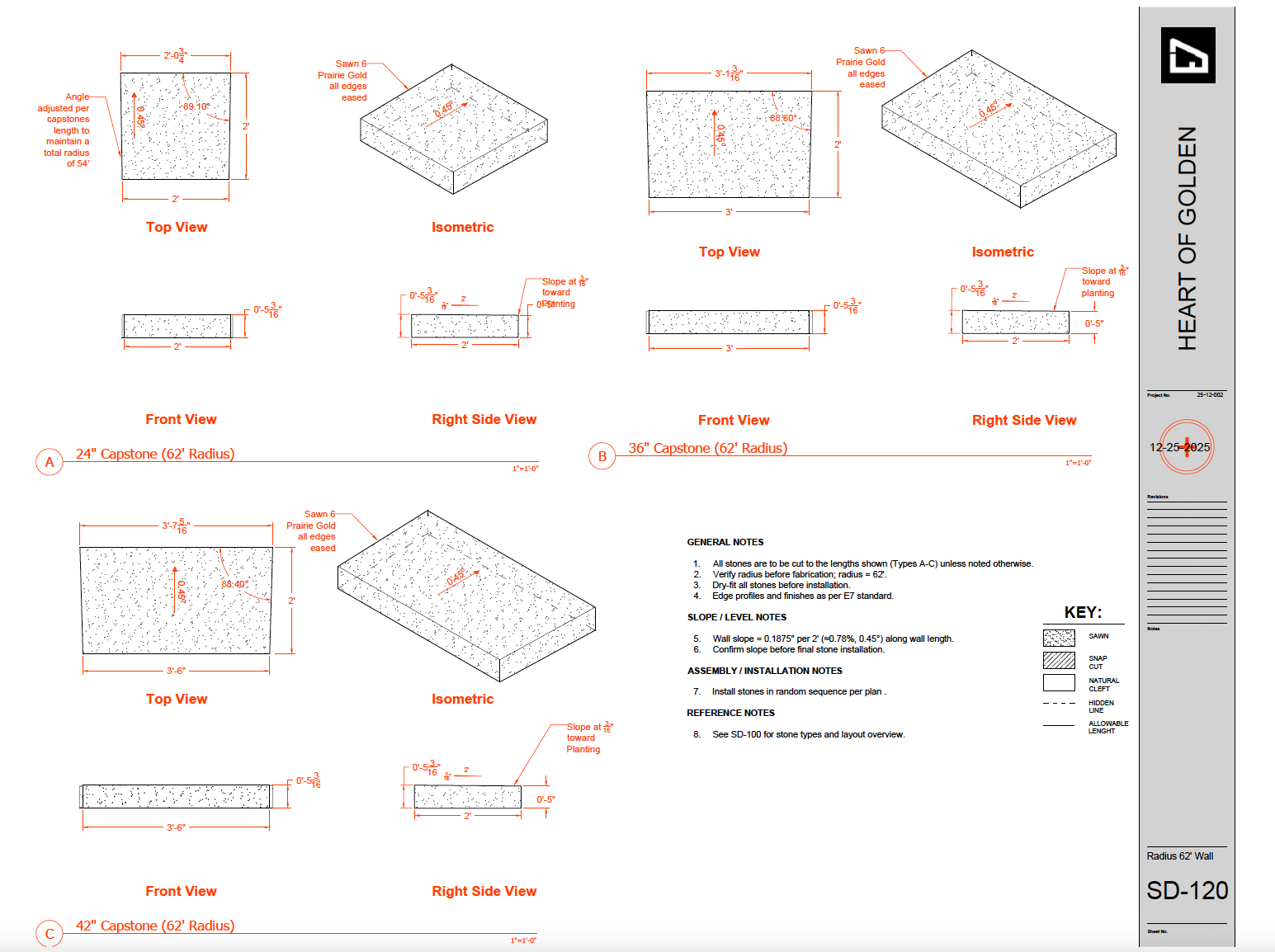
Fabricators don’t want to interpret design intent. They want clear instructions. Good shop drawings should answer questions before they’re asked:
Exact dimensions
True radii
Thickness and edge profiles
Piece labeling
Orientation and sequencing
CNC-ready clarity
When drawings are clean and easy to understand, the shop runs more smoothly. There’s less back-and-forth, fewer phone calls, and less production downtime. Time in a fabrication shop is money. If your crew is standing around waiting for clarification, that’s money being burned.
3. Fewer Field Adjustments = Fewer Change Orders
Inaccurate drawings often push the problem downstream. If something doesn’t fit in the field, now you have installers making adjustments that were never planned. That leads to:
Sloppy modifications
Compromised design intent
Extra labor costs
Frustrated clients
When shop drawings are coordinated properly with field conditions and design layouts, fabrication matches installation. Everything lands where it should. That’s where real savings happen — not just in material, but in avoiding chaos.
4. Precision Builds Trust
This part gets overlooked. When your drawings are dialed in, contractors and fabricators trust you. They stop double-checking everything. They stop worrying about hidden errors. They move forward confidently. That confidence speeds up the entire project. And when projects move efficiently, owners notice. That’s how you build long-term relationships — and repeat work.
5. Good Shop Drawings Protect Your Margin
Whether you’re a fabricator, GC, or designer, sloppy documentation eats into profit. Every mistake reduces your margin. Every remake, every delay, every rushed fix — that’s money coming out of someone’s pocket. Accurate shop drawings protect the margin before fabrication even starts. It’s not glamorous work. It’s technical. It’s detailed. It requires discipline. But it’s the difference between a smooth production cycle and an expensive headache.
I genuinely believe technical drafting is one of the most underrated profit-saving tools in construction. People get excited about design (and I love design too), but precision in documentation is what keeps projects profitable. If you’re investing in fabrication — whether it’s stone, millwork, metal, or custom assemblies — don’t cut corners on shop drawings. Because the cost of doing them right is always less than the cost of fixing them later.
— Daniel
E7 Studios